
A shipper sends three pallets of moulded plastic housings. The scale says 240 kilograms. The invoice says 1,150. Nothing has been added and nothing has gone wrong: the cargo was simply billed on the space it occupied rather than on its mass, and nobody explained that before it shipped.
This is chargeable weight, and it is the foundation of air freight pricing. Understanding it is the difference between a quote you can plan against and a quote that turns into a conversation with your finance team.
Why aircraft bill on volume at all
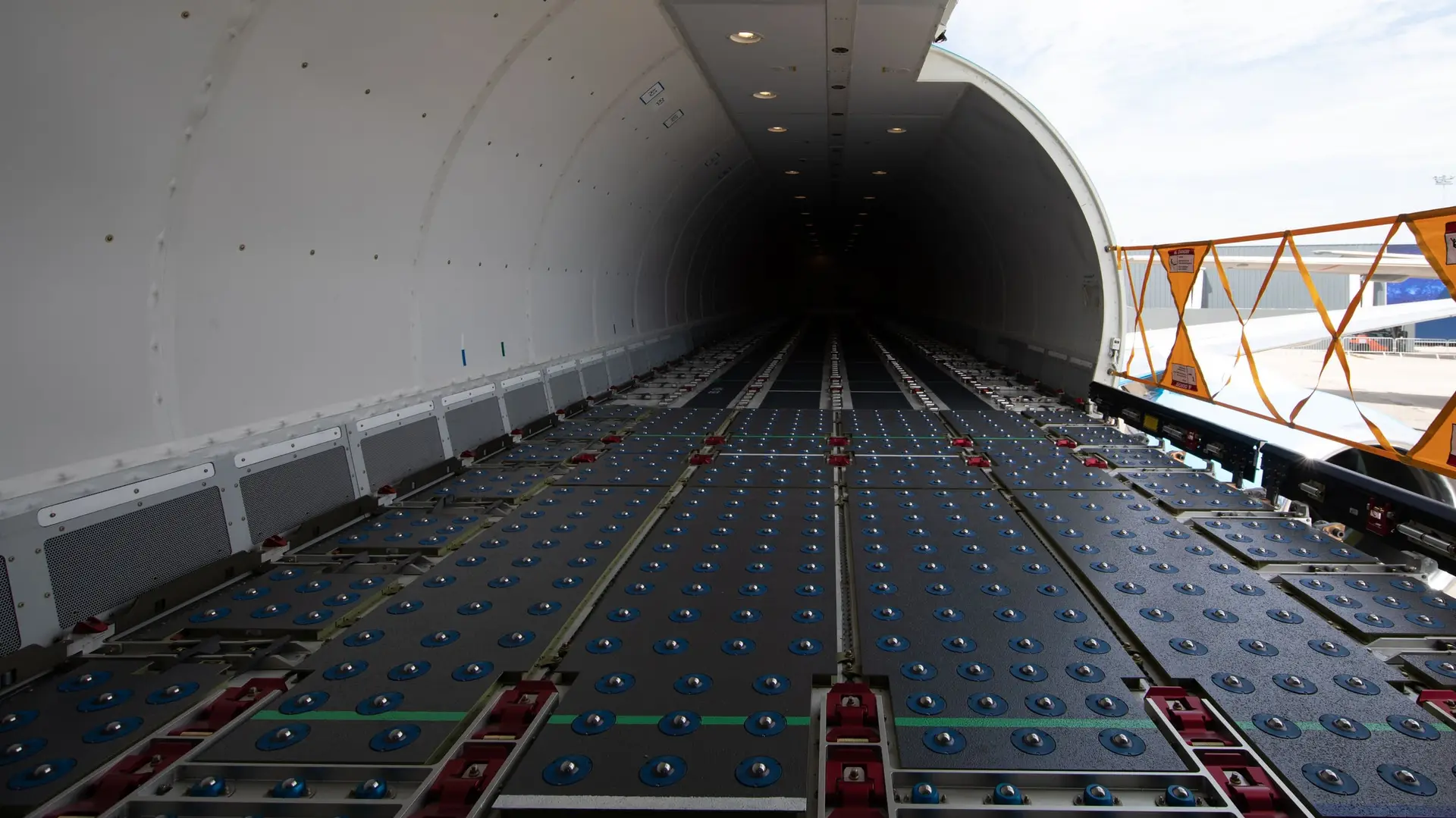
An aircraft has two limits: how much mass it can lift, and how much space it has to put things in. Most of the time the space runs out first. A hold filled with pillows reaches its volumetric limit long before it troubles the maximum take-off weight, and the airline has sold none of the payload it is actually able to carry.
Charging by mass alone would mean giving that space away. So the industry prices on a standardised assumption about density, and any cargo lighter than that assumption is billed as if it were denser.
The calculation
Volumetric weight is derived by dividing the cargo's volume by a fixed divisor. For air freight the IATA standard is 6,000 cubic centimetres per kilogram.
Volumetric weight (kg) = (L × W × H in cm) ÷ 6,000
That divisor implies a break-even density of about 167 kilograms per cubic metre. Cargo denser than that is billed on its actual weight. Cargo lighter than that is billed on its volume. Every commodity sits on one side of that line, and it is worth knowing which side yours is on before you request a quote.
| Commodity | Actual gross | Volumetric | Billed as |
|---|---|---|---|
| Machined steel parts | 780 kg | 320 kg | 780 kg (actual) |
| Packaged electronics | 310 kg | 320 kg | 320 kg (volumetric) |
| Plastic housings | 95 kg | 320 kg | 320 kg (volumetric) |
| Foam packaging | 40 kg | 320 kg | 320 kg (volumetric) |
The pallet occupies 1.92 cubic metres in every case, so its volumetric weight is 320 kilograms in every case. Only the steel is dense enough to be billed on the scale. The foam pays exactly the same as the electronics despite weighing a quarter as much.
Weight breaks, and the quote that gets cheaper as it gets heavier
Air freight rates are quoted per kilogram, but the rate per kilogram falls in bands, typically at 45, 100, 300, 500 and 1,000 kilograms. Each band is cheaper per kilo than the one below it.
This produces a genuinely counter-intuitive result. A shipment of 290 kilograms charged at the 100 kg band rate can cost more in total than the same shipment declared at 300 kilograms and charged at the 300 kg rate. The industry calls this booking to the next break, and any competent forwarder checks it on every quotation.
Reducing the billable weight
When volumetric weight is the higher figure, the cargo is paying for air. That is frequently reducible, and always cheapest to address before the shipment is built rather than after it has been weighed at the airline's acceptance counter.
- 01Reduce the height. Volume is three-dimensional, so trimming the tallest dimension usually gives the largest saving for the least effort.
- 02Eliminate overhang. Cargo protruding past the pallet edge is measured to its widest point, and the protruding centimetres are billed across the whole footprint.
- 03Reconsider the pallet. A pallet chosen for warehouse convenience is often taller and wider than the cargo requires.
- 04Nest and disassemble. Where the product allows it, shipping components nested or knocked down can halve the cube.
- 05Consolidate deliberately. Two half-filled pallets bill as two full ones; one properly built pallet bills as one.
One divisor is not universal
The 6,000 divisor is the IATA air freight standard, but it is not the only one in circulation. Integrators and courier services commonly apply 5,000, which produces a higher volumetric figure for identical cargo. Road and ocean use different conventions again: ocean LCL is billed on revenue tonnes, where one cubic metre is set against 1,000 kilograms.
So a dimensional weight quoted by a courier is not comparable to one quoted by an air freight forwarder. When comparing offers, confirm the divisor each one used before concluding that either is cheaper.
The practical position
Chargeable weight is not a charge that gets added. It is the basis on which the entire quotation is built, and it is knowable in advance from nothing more than a tape measure and a set of scales. Any surprise on the invoice means the figure was not calculated at quotation stage, which is a process failure, not a pricing one.
Published 18 August 2026.